
Down Highway 61

“[Bob Moses] found me and spent most of the time that summer at my house. In the fall of that year, I went to Atlanta to the meeting of the Student Nonviolent Coordinating Committee and invited them to come to Mississippi. So they came, set up their first office in Jackson, Mississippi, and then kind of spread it out all over the state. Activities were going on in McComb, Jackson, Indianola, Cleveland, Ruleville… They had more courage than any group of people I’ve ever met.”
—Amzie Moore
I was staring out at a tilled field in Clarksdale, Mississippi, watching the early light hit rows of land that once grew cotton, while my friend finished packing her things. We had been in the Delta for two days at that point after some time in Memphis.
Last month I went to Mississippi. I had been before, since I have family in the southern part of the state, but this was my first trip to the Delta.
My grandparents had picked cotton in the Delta, yet the land itself was new to me. The Delta, a short drive down US 61 from Memphis, is lush and green. The land is flat, broken into vast fields that once grew cotton and now mostly grow corn, soybeans, alfalfa, and catfish in manmade ponds. There is something more beautiful to me about this flatness than in my home state of Illinois.
Because of the openness, Delta sunsets are spectacular. The night before, lavenders, hot pinks, and oranges moved across the sky over the expansive land once home to Robert Johnson.
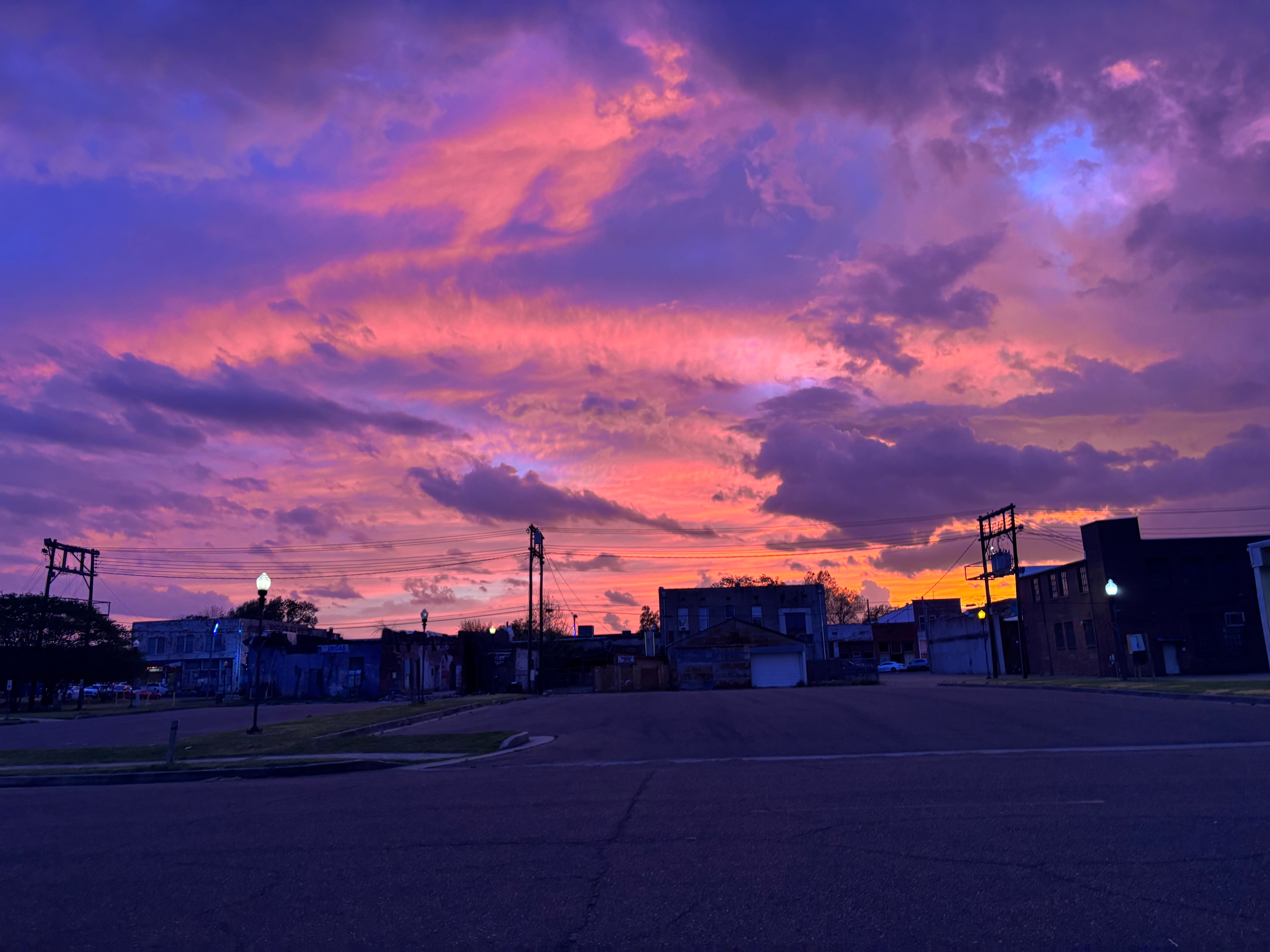
Bluesman Mississippi Fred McDowell once sang about Highway US 61(The Blues Highway), “It’s the longest road I know-whoa.”
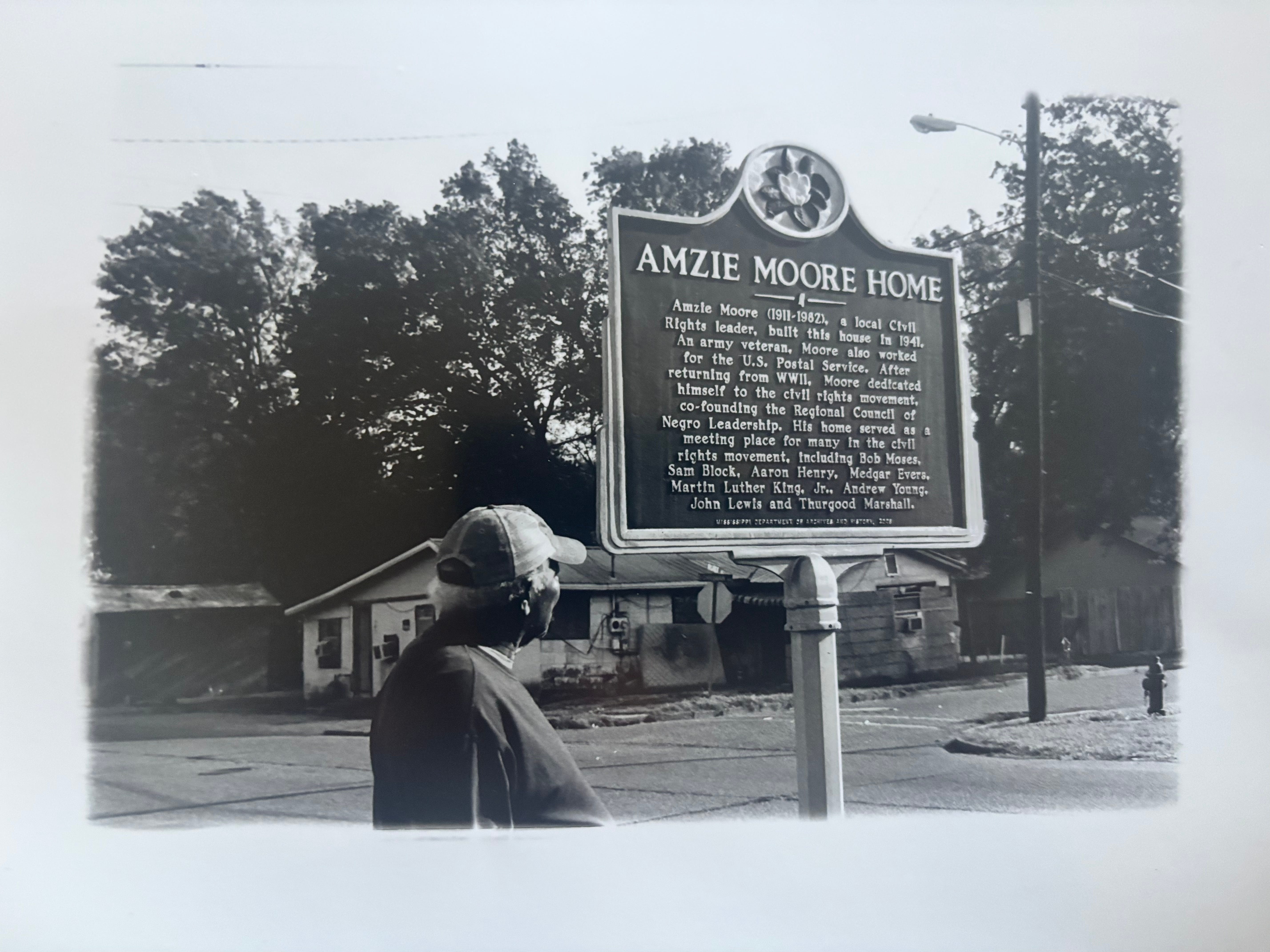
This is the story of one perfect day driving down that long road. The day began, at Amzie Moore’s house.
I had wanted to visit Amzie Moore’s house for years. Moore is someone I often return to in my work, a figure I think more people should know. I’ve written about Ella Baker sending Bob Moses down to Cleveland, Mississippi, to meet NAACP leader Moore as a pivotal moment in the Black Freedom Movement. Beyond that, his house was central to SNCC’s early organizing in the Delta, housing many of the first organizers who came south. And beyond even that, Amzie’s lifelong work in Cleveland reshaped Black life there long after “the Movement” moved on.
I had clear instructions to arrive at Amzie’s house at 8am, to meet my guide for the day, Mr. Charles “Mac” McLaurin. Mr. Mac joined SNCC in 1962 when he was 21 years old. When I first began planning my Delta trip, nearly everyone I reached out to directed me to Mac.
First, I reached out to writer Kiese Laymon, who directed me to his mother, who sent me to Mac. Then I reached out to Charles Payne, who wrote one of my favorite books on SNCC, I’ve Got the Light of Freedom. He sent me to Mac. Then Judy Richardson told me that if I was going to the Delta, Mac was the person I needed to meet. All roads led to Mac.
So I called him. For about a month, we spoke over the phone and got to know each other. We shared stories about our Mississippi family connections, the goals of my trip, his time in SNCC, and the Civil Rights and Blues tours he had led over the years. We talked about Trump and newspapers and our youth. Together, we built an itinerary and agreed that on Good Friday, I would meet him at 8 a.m. sharp at Amzie Moore’s house.
I had an almost emotional reaction as I drove up and saw Mr. Mac step out of the house. I thought of Bob Moses and Ella Baker—people I never met, but whose work and vision have shaped my understanding of the world. We went inside Amzie’s house, now a small interpretive center and museum open by request. Mac and I hugged, and he immediately began telling us about joining SNCC and meeting Amzie Moore.
Mac had organized with Medgar Evers in Jackson, and he had heard of Mr. Moses and Mr. Moore. Although, he thought they would be a bit different.
“Coming from Jackson, I have this idea that if a man is a great leader, he’s going to be big and tough.”
Of course, the opposite was true. Both Amzie Moore and Bob Moses were relatively soft-spoken, neither with an imposing presence. Mac laughed as he remembered his own shock.
“They wanted me to follow Bob?!” he said, still amused. But he soon learned that Bob Moses was exactly the kind of leader they needed, and he came to trust him.
As we walked through the halls of the ranch-style house, Mac told us that he stayed in the home for months with Moore when he began his field work registering voters in the Delta area surrounding the house.
Much of this history I already knew, but hearing it from Mac made me ask question after question. I did this as my stomach growled, and it was only then that I remembered that I had not eaten breakfast that morning. I was physically hungry, but more than that, I was hungry for this history—for the present connection to it standing on this land. Mac’s stories nourished me.
My friend pointed out a photo—shot by Danny Lyon— from I’ve Got the Light of Freedom in Moore’s kitchen. We stood in the kitchen, with its same white, wooden cabinets, looking at a photograph of Moses, Sam Block, Willie Peacock and another SNCC member standing right where we were standing on that Good Friday.
Mac made sure to show us where Moore stored his guns, as armed self-defense was always part of the Movement.
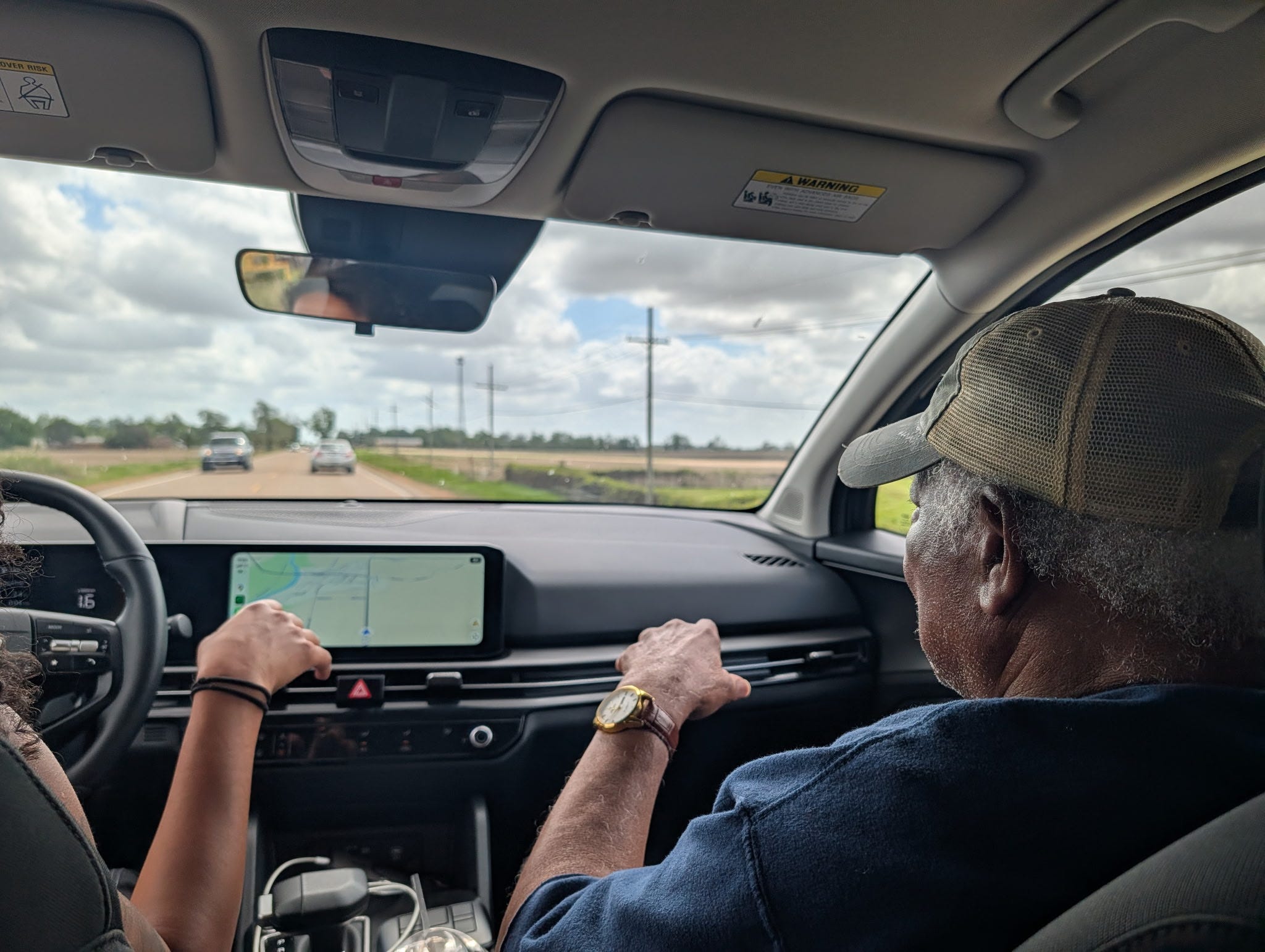
“Time to go to Ruleville.”
After some time at Amzie’s, we loaded up the car, and Mac started to direct me to Ruleville. He sat on the passenger side, and as I drove, he told me how he used to be in the driver’s seat while Fannie Lou Hamer sat in the passenger seat.
“We’d eat bologna sandwiches and drink strawberry pop. I’m driving, she’s talking.”
I felt so grateful to now be driving Mac, even as the responsibility of navigating and driving stressed me out a bit. My “home-training,” made me hesitant to interrupt him—my elder—to ask where I should turn.
We passed Amzie Moore’s service station. The building is boarded up now, no longer in use, but it looked as I had seen it in photos. When Moore refused to put up a “colored only” sign, the local white power structure cut off his credit and forced him to close the station.
We passed lovely brick houses—brick like Moore’s—and Mac told us that in the 1960s this area was all cotton fields. It is because of Amzie Moore’s organizing that these houses exist at all.
“This public housing is thanks to Amzie. This park is thanks to Amzie. See those houses? Amzie built those houses.”
We entered Ruleville, welcomed by a sign “Ruleville—Home of Fannie Lou Hamer.” We stopped at a house on the street where Mrs. Hamer once lived to pick up keys to the Fannie Lou Hamer Museum.
Around the corner stood what looked like a school or community center; it was the Fannie Lou Hamer Museum. Mac unlocked the doors, turned on the lights, and let us inside. There were photographs, voter registration records, newspaper clippings and other artifacts from Mrs. Hamer’s life.
Mac explained that the building had once been a segregated community center, built for Black residents who were barred from the whites-only facilities during Jim Crow. Today, it remains partially in use as the Museum. He also told us that the Museum existed because of Hattie Jordan, a local woman, who learned about Fannie Lou Hamer, became devoted to preserving her legacy, and insisted she deserved a museum. Jordan died before it was completed, but without her and Mac’s labor, the museum would not exist.
I have often felt shut out of spaces because I don’t have a PhD, MFA or JD. At other times, I receive unsolicited advice from people who do. I was reminded here, that expertise is not confined to credentials. History is often upheld and preserved in communities by guerrilla archivists or by people who just love their communities.
I loved the museum’s dedicated space to Mrs. Hamer’s childhood. It was filled with relics of plantation life and dried cotton plants.
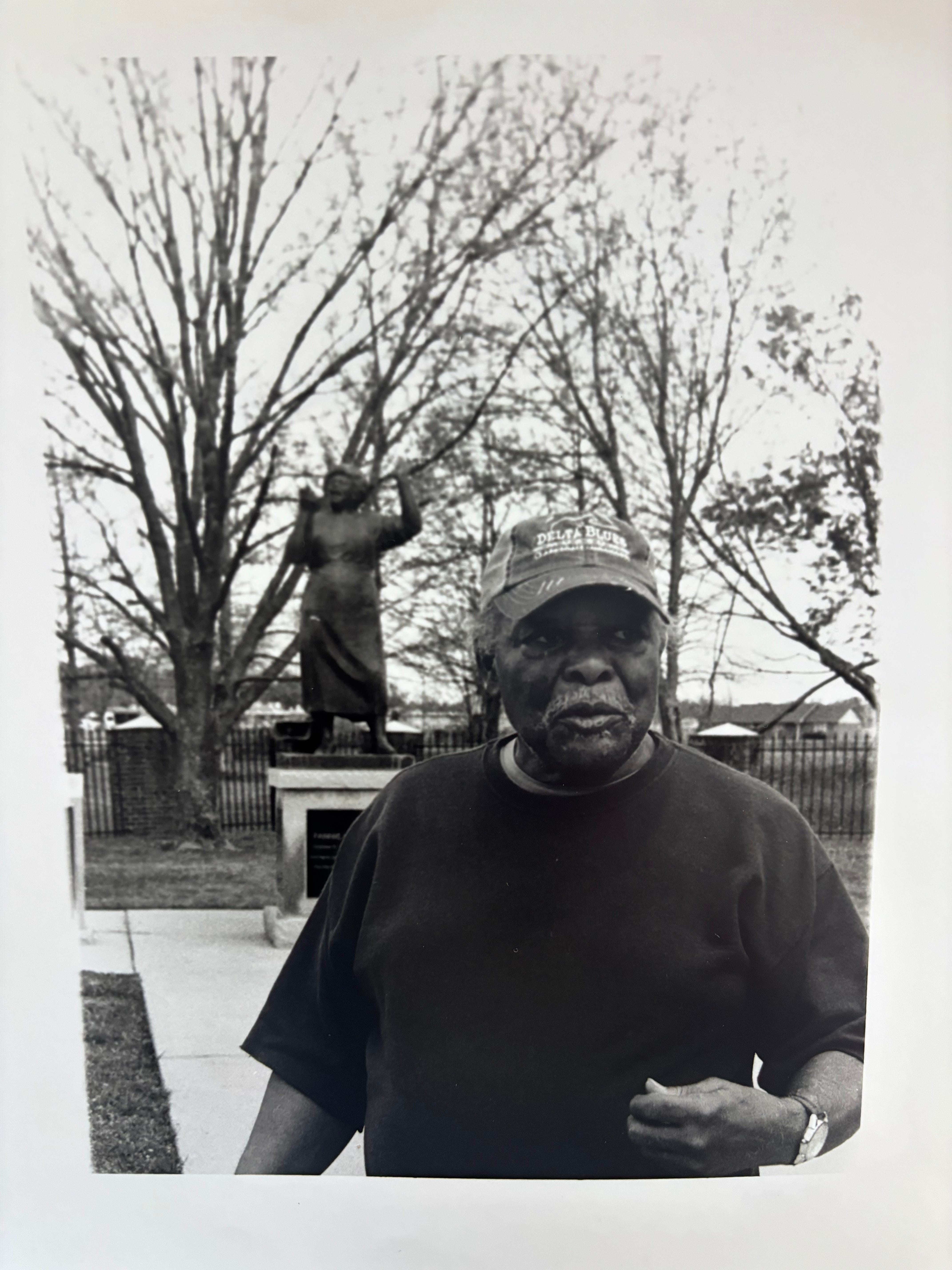
As we left, Mr. Mac said, “Tess, take a picture with me here. So you can say you were here.” We then drove about a minute down the road to Mrs. Hamer’s gravesite.
We walked through the arch, Fannie Lou Hamer’s Memorial Garden, entering a space marked by a gazebo and an informational plaque. As we began to walk toward Mrs. Hamer’s gravesite and the statue of her, Mac stopped us.
“When Mrs. Hamer passed away, her husband came to me, and said, she spent more time with y’all than with me. You sort her burial.” And so, Mac did and was essential in the establishment of this beautiful memorial.
“Mrs. Hamer always told me that she didn’t want to be buried on a plantation, so I made sure that she was laid to rest off a plantation. Follow me.”
We did, and he led us right up to her statue. Mac explained that he wanted visitors to look up at Mrs. Hamer’s face, as they approached–-that she deserved to be met with attention.
“Mrs. Hamer was one of my best friends,” Mac often said.
I asked when he first met the woman we sometimes treat as immortal in movement spaces.
“Bob [Moses] said go find that lady who was singing on the bus. People told me who it was. They told me that was Fannie Lou Hamer. I went and found her, and Bob told me to bring her to Tougaloo College in Jackson.”
After that, Mrs. Hamer, 44 at the time, was brought with the SNCC-ers to Fisk and went to several other colleges. Mac didn’t see her for about six months. Then in 1963, Bob Moses called Mac asking him to go find Mrs. Hamer again.
“He said bring Fannie Lou Hamer and get her qualified to run for congress. I thought he was drunk. He’s asking me to go get a 6th grade [educated] sharecropper to run for congress. … The only congressmen I knew were all white, and the only black [congressmen] I knew were all lawyers.”
He went to Amzie Moore for guidance. Moore directed him to take Mrs. Hamer to the secretary of state’s office in Jackson, which he did.
“We finally get qualified. The guy who is supposed to be our campaign manager didn’t show.”
Mrs. Hamer told Mac to write his name in.
“Now Mrs. Hamer, I don’t know a thing about being a campaign manager,” he said. “She said to me, ‘Mac you know about as much about being a campaign manager, as I know about running for congress. Put your name on the papers and let’s go home.’ I put my name on the papers and ended up a campaign manager.”
The Council of Federated Organizations (COFO) office helped them, and the rest, their lifelong friendship, and Mrs. Hamer’s testimony at Atlantic City for the Mississippi Freedom Democratic Party (MFDP)—is history.
As we left Ruleville, Mac again pointed out the material changes shaped by Mississippians organizing.
“See those houses? That’s because of Mrs. Hamer. She had all these houses built.”
We drove past cypress trees rising from shallow bayous and rivers. The rivers snake, and we often crossed the same river twice just by driving straight. Long stretches passed without another car. Eventually, we passed Parchman Prison, now the Mississippi State Penitentiary. Mac spoke about the times SNCC organizers, Freedom Riders and others involved in the Movement were kidnapped and taken there.
We made it to Sumner, Mississippi, the small town home to the Tallahatchie County Courthouse. The courthouse looked much as it did in 1955, when Mamie Till-Mobley testified there on behalf of her lynched son, Emmett, before an all white supremacist jury.
We drove past the river from which Emmett Till’s body was recovered, then down a dirt road into Money. There is no longer a street sign marking Money. A marker at, what was, Bryant’s Grocery & Meat Market tells Till’s story, but the former store is overgrown with magnolia trees.
When we pulled up alongside the site, I was startled by a deer that suddenly emerged from the trees, before he bounded and disappeared into the overgrown remains of the store.
Mac told us that he had met one of the two men who kidnapped, tortured and murdered Emmett Till. They went on living and working in the Delta long after the brief trial declared them innocent and free.
We continued on to Greenwood, entering through the white part of town. There were large houses, with manicured gardens, fenced behind iron gates.
We stopped at the Emmett Till statue. Mac immediately told us that he did not care for the statue, “They made him look like a man, when he was just a boy.”
By then, it was about 1:30pm, and we rushed to grab lunch because in Mississippi, restaurants close at 2pm for siesta. I ordered what was called a salad; the salad leaves were hidden among the fried asparagus, fried crawfish and pasta.
After lunch, the sun was bright and hot, and it felt like a proper Mississippi summer day. We headed into the predominantly Black part of town, which I understood when we passed the beauty supply store. The homes stood close together, many in disrepair, with boarded-up windows.
We pulled up to a concrete slab between two row houses, and Mac told us that the first SNCC office was at this site. Dottie Zellner once told me that when she worked there, she always knew Stokely Carmichael (Kwame Ture) was arriving when she heard tires screeching; he drove that fast. Another time, she and Judy Richardson had to run back toward the office when racists began shooting at the building.
Across the street, a group of young men sat on the steps of a small house. I wondered if they knew why we had stopped there. I wondered if they knew what SNCC was, and I regret not asking them.
Mac led us around the corner, past a corner liquor store, storefront church and blooming azaleas. We had reached Broad Street Park.
In 1966, James Meredith was shot during his March Against Fear on just the second day of the march. He had begun in Memphis with the goal of walking through the Delta to Jackson, exposing the violence of racism along the way. Kwame Ture was in Mississippi at the time and after Meredith was hospitalized, continued the march with others.
In Greenwood, Ture was arrested. When Mr. Mac went to pick him up from jail along with other SNCC members, Ture was fired up and angry. Mac and others told people to meet them at Broad Street for a rally that evening.
In this park, where we now stood, Mac held Ture’s microphone as Ture addressed the crowd. For the first time, he said:
“We been saying freedom for six years and we ain’t got nothin’. What we got to start saying now is Black Power! We want Black Power!”
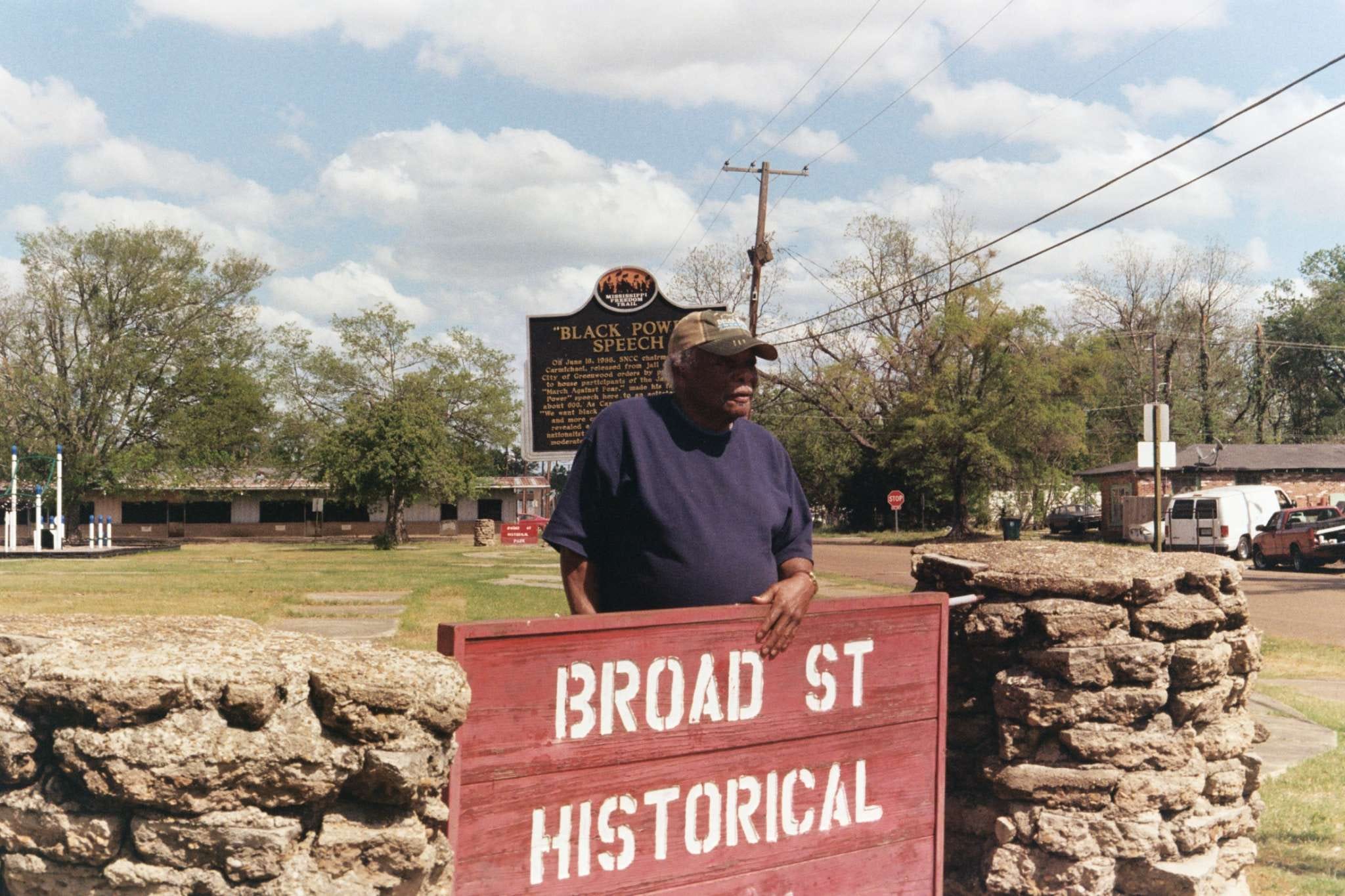
SNCC was Mac’s political home until 1967. Afterward, he continued to support Mrs. Hamer’s work, including her farming cooperatives and efforts to establish Head Start programs in the Delta. In Greenwood, he could still point out all three of the town’s former SNCC offices.
After Greenwood, we headed to our final stop of the day and on the way, Mac directed me to his doctor’s office, where he wanted to change his upcoming appointment in person rather than over the phone, “This has been my doctor for decades, and I’ve never had a white doctor. All of my doctors have been Black.”
I thought this was sweet and revealed something special about Mac’s character; he loves his people and believes in connections that can only be formed in person.
We finally made it to the Indianola courthouse. Mac was back in his current hometown, although he reminded me often throughout the day that he is originally from Jackson–he left Jackson in 1962.
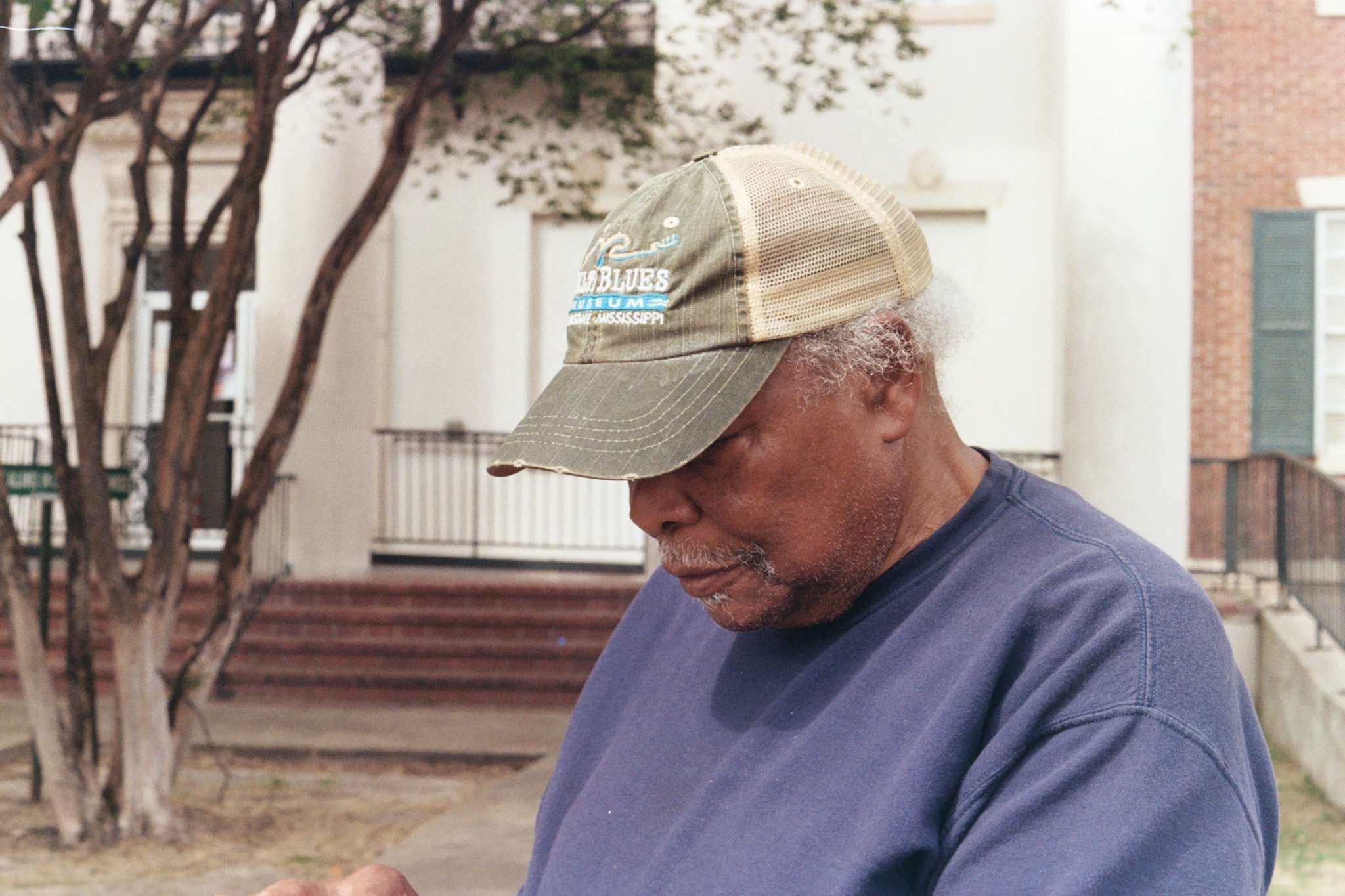
It was here, at this courthouse, that he first brought Mrs. Hamer to register to vote. We read the marker, which explained this history too, and while we read, two little boys approached us—Mac’s great-grandchildren. Talking with those sweet kids felt like a gentle way to end the day. The oldest, 8-years old, assured us that although he got in trouble for cussing in class, his teacher actually misheard him because she was on the other side of the room. He questioned why he was singled out. Mac’s legacy of questioning the powers that be with logic and reason, had been passed down.
We hugged Mac and the littles goodbye, and I drove us back to Amzie Moore’s house, where the day had begun. It was a perfect, dreamy, rigorous day in the Delta.
The next morning, I went for a jog through town on a path filled with older Black women power-walking. Later, we drove to Dockery Plantation—home of Charley Patton and often called the birthplace of the blues—when a phone began ringing mysteriously in the car.
It was Mac’s phone.
After a chain of calls to SNCC friends, trying to track down his wife’s number, we eventually reached him by email and arranged to meet in a McDonald’s parking lot in Indianola.
Mac pulled up in a large gold pickup truck, hopped out with the swagger of a rapper, and we hugged, like family members do, without awkward hesitation. I felt certain we were meant to see each other again before I left Mississippi.
My friend and I made our way back through Clarksdale for one last plate of hot tamales and saltine crackers, then returned to Memphis for the commemoration of Dr. King’s assassination at the Lorraine Motel. The ceremony was incredibly moving; I was inspired by the gospel choir’s silky voices and the words of the brilliant Justin Pearson.
That night, we stayed in an Illinois Central–themed hotel above Central Station in downtown Memphis, each room named for a stop along the line. By chance, we were placed in the Hazlehurst room—my family’s town in Mississippi. A photograph of the Hazlehurst stop hung on the wall, a place I’ve actually walked past before.
The next morning I drove to Nashville, dropped my friend off, and continued alone to Russellville, Kentucky for a final pitstop. It was Easter Sunday. I missed church—maybe intentionally—and I went to Easter supper with my SNCC friend Charles Neblett and his wife, Marvinia. Marvinia had to run home on the way to supper, and Charles hopped into my car, so that yes, once again, I was driving with a SNCC member named Charles in the passenger seat.
We talked about the Delta—about Mac and Mrs. Hamer. When I finally prepared to leave Russellville, Charles reached across the table and took my hands. Then the three of us began to sing a song from the SNCC days, one organizers would sing after being released from Parchman:
“I know, I know. I know we’ll meet again. I know, I know. I know we’ll meet again, and you and I will never be apart, when we meet again.”
Thanks for reading!
(Please enjoy my Mississippi car playlist.)
So many beautiful details in the story. I love the strawberry soda and bologna sandwiches, and I love the 2 o’clock siestas for the restaurants lol. You humanize legends, which I always think is a feat. It’s really interesting to see that they kind of struggled with the same problem, tho. It’s cool to read about Mac kind of expecting Bob Moses to be a superhero. And now folks like Mac seem like a superhero to many of us. Great piece.
Also, I did Americorps Charles Nebblet's son Komero. And when he would tell me his dad was a civil rights activist, I kind of didn’t believe him until I saw the pictures LMAO.
This was so good to read. Thank you for sharing and for capturing history.