
A Life Learning SNCC
What I’ve learned from relationships, archives, and teaching, and why SNCC is so often misunderstood.

It’s New Year’s Day. I’ve just finished making and eating black-eyed peas with greens and cornbread. My small apartment smells like pork fat and Creole spice. I’m tired from cooking (plus from the drinks and dancing last night at Barzakh Cafe).
Even so, I’m about to bake sweet potato pies, a family recipe, for my dear 88 year old friend, Dottie Zellner.
Dottie was 22 years old when she joined the Student Nonviolent Coordinating Committee (SNCC), after participating in CORE sit-ins two years earlier, in 1960. Her time in SNCC is what brought us together.
Over the years, I’ve been lucky enough to build real community and friendship with several SNCC members. I’ve learned from them not only through books and archives, but in living rooms, at Busboys and Poets and walking down Amsterdam Avenue. I’ve connected to SNCC’s work in the Deep South, not only out of admiration for the Black radical tradition but through my own family’s history in southern Mississippi.
Being in community with SNCC members has shaped how I understand radicalism and why I resist the way SNCC is so often misremembered, even by parts of the Left. It bothers me when the organization is labeled “liberal,” as if its members were not engaged in some of the most dangerous and principled organizing this country has seen. I hear this most often from people who quote Stokely Carmichael (Kwame Ture) without grappling with the fact that his political formation, and much of his life’s work, unfolded inside SNCC.
Meeting Diane Nash
In 2011, I met another SNCC member, Diane Nash, when she spoke at my college on a panel about the documentary Freedom Riders. I interviewed her for the school newspaper.
Diane Nash was a founding member of SNCC. In April 1960, she traveled to Shaw University after Ella Baker organized a meeting for the young people, like Nash, who had been involved in the sit-in movement. Dr. King wanted a youth wing of his organization, the Southern Christian Leadership Conference (SCLC) to form. Ms. Baker insisted that the young people form their own autonomous organization with consideration for the size of the organization. She was inspired by the cell structures in the Communist Party.
“Adult Freedom Fighters will be present for counsel and guidance, but the meeting will be youth centered.”
126 students attended the meeting, and at the end, SNCC was born. The largest contingent of members were from Nashville’s student movement, including Ms. Nash, John Lewis and Bernard Lafayette.
I stayed in touch with Ms. Nash. Years later, I asked her for advice about community organizing, which I had begun doing.
She was stern and direct. She never told me what I wanted to hear or filled my head with delusions of grandeur and for that I am grateful. In a 2015 email, she pushed me to examine my expectations:
“After [number] people got involved in demonstrations, and after the media attention lasted for [number] days, you would have said, ‘Okay. We have won. We can quit demonstrating and be satisfied and happy.’ And you would not feel disillusioned about the power of demonstrations.
I am sorry that you did not respond to me literally when I asked you to fill in the blanks. I was following your lead to understand why you were disillusioned and what your expectations are. No one can give you what you want unless you know simply, clearly, and concretely what that is—and communicate it.”
Her words shifted my perspective. I dug deeper into SNCC history, starting with Charles M. Payne’s I’ve Got the Light of Freedom: The Organizing Tradition and the Mississippi Freedom Struggle. It’s one of the best organizing manuals we have, and I recommend it to everyone. Payne explores SNCC’s early years through an Ella Baker lens, a perspective largely absent from earlier histories.
Last month, I spoke on a panel at the Schomburg Center’s Black Freedom Studies series marking the 30th anniversary of Dr. Payne’s book. I was there alongside SNCC scholars like Hasan Kwame Jeffries, who has written beautifully on SNCC’s work in Lowndes County, and Charlie Cobb, who joined SNCC at 19 and later wrote This Nonviolent Stuff’ll Get You Killed: How Guns Made the Civil Rights Movement Possible. Cobb also helped ideate the 1964 Freedom Schools and wrote the Afrocentric, radical curriculum used in them. Payne himself was on the panel as well. (It’s available on YouTube for anyone interested).
Payne’s book should be foundational for anyone on the Left who cares about organizing with working-class communities. I often think of Ella Baker sending Bob Moses to Mississippi to meet her longtime friend and comrade Amzie Moore, who immediately connected Moses to local organizing efforts to register Black voters. This wasn’t liberalism. It wasn’t tied to any candidate. They wanted to build Black power for themselves and their communities.
Who SNCC Actually Was (And Is)
I became friends with Dottie and another SNCC powerhouse, Judy Richardson, after I started inviting them to speak in my classroom when I was still teaching. Eventually, I met Charles (Chuck) Neblett, a longtime SNCC member and one of the founders of the SNCC Freedom Singers. He sang with our beloved Bernice Johnson Reagon (I know I have many Sweet Honey fans here). Their visits were always the most memorable moments for my students. The day Chuck came to sing in my classroom during our unit showcase, was my proudest day as an educator and one I know my students and their families will never forget.
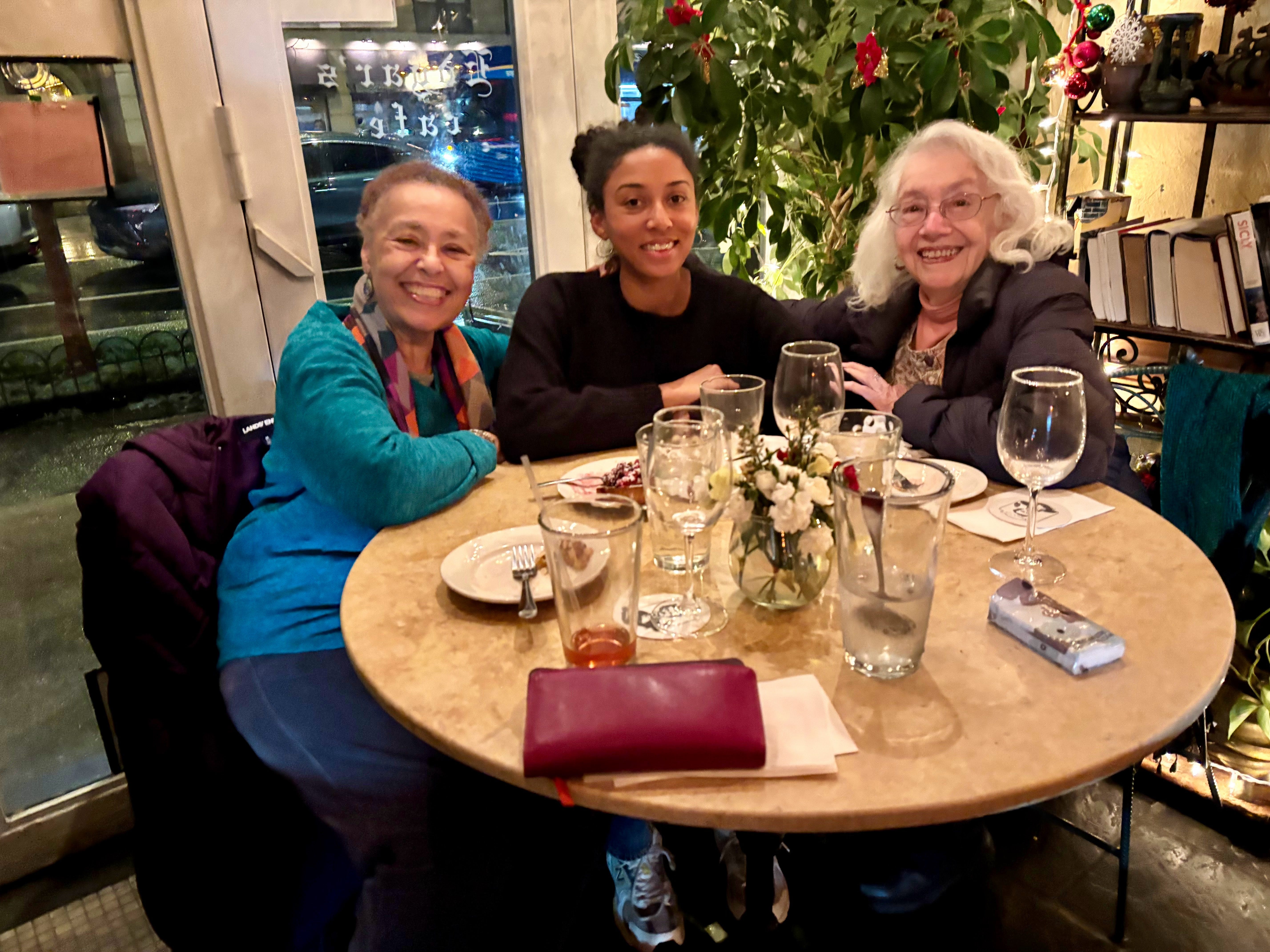
Once, my 6th graders asked Judy about her friendship with Stokely Carmichael. She laughed immediately. “Man, what you probably don’t know is how funny Stokely was. He was always cracking jokes.”
And actually, every SNCC member I’ve met has said the same thing about Carmichael, a man I consider one of the greatest thinkers of the 20th century.
Young people latch onto SNCC history because they see themselves as active participants in shaping the world of their radical dreams. They connected when we read primary sources about SNCC’s early days, including their critiques of pastors, even Dr. King, as stuffy and old-fashioned.
Dottie once visited and cried as she told my students about a time an older Black man moved off the sidewalk to let her walk by because she’s white. “I was a young little nothing, and it broke my heart that he felt he had to move for me,” she told us.
My former student, a young lady who will surely grow up to be a brilliant leader and change maker, recently wrote to Dottie:
“You have changed the way I see the world. I hope you know the difference you’ve made in our lives.”
This student is now in 8th grade. Last year, she joined my SNCC study group even though I was no longer her teacher, and she had no obligation to be there. The group was mostly adults. She came because she wanted to learn more about SNCC and to connect with Judy Richardson and Dottie Zellner through their book, Hands on the Freedom Plow.
If we want young people to grow up selfless, connected to others, and committed to socialist organizing, we need to teach them SNCC.
Misunderstood on the Left
After years of learning from SNCC members, reading their histories, and watching young people connect to the work, it’s disappointing how often SNCC is misremembered on the Left. Many activists admire the Black Panther Party or the Black Liberation Army, yet the organization that laid the groundwork for both is sometimes overlooked.
This misunderstanding misses the truth of SNCC’s radicalism. There is no BPP without SNCC. There is no BLA without SNCC. I admire both—but no more and no less than I admire SNCC.
While SNCC was multiracial in its early years and later exclusively Black, it was always grounded in Black nationalist thought, tracing a lineage through thinkers like Martin R. Delany. Delany argued that Black freedom required self-determination, independent leadership and collective power; not faith in white liberalism or symbolic inclusion.
SNCC embodied this tradition long before 1966, when Stokely Carmichael called for “Black Power” at the March Against Fear in Greenwood, Mississippi. Even during its multiracial period, the organization remained firmly rooted in Black leadership and self-determination, understanding—as Delany did—that Black people constituted a nation within a nation. Coalition building never meant ceding control. This commitment to Black nationalism was always there.
The Radical Blueprint
To overlook SNCC is to overlook the roots of organized Black power in the United States. Political ideologies aside, SNCC offers a blueprint for how organizers can work with working-class communities to build power from the bottom up.
That blueprint was lived by real people with varied, but left, politics. Dottie grew up in a Jewish communist family in Lower Manhattan. She once told me about the night her family waited anxiously in Union Square for news of the Rosenbergs’ execution, an early lesson in the cost of fighting racial capitalism in this country. Decades later, after organizing throughout the South, she has continued that commitment through her advocacy for a free Palestine. This past summer, we went to Mahmoud Kahlil’s release rally together.
My friend Chuck Neblett grew up in southern Illinois and helped desegregate his town’s public pool. He, along with the SNCC Freedom Singers, sang at the March on Washington for Jobs and Freedom. He once told me about the time he interrupted a white supremacist rally in Atlanta in the early 1960s. His brother, Chico Neblett, also in SNCC, later moved to Ghana after spending time with the Panthers. Chuck himself is a militant Black nationalist, tenacious in the face of white supremacy and unwavering in his commitment to collective struggle. He also sings like an angel, and when I look back on my life, hearing Chuck sing will stand as one of its highlights.
Judy Richardson brings a different lineage. Vibrant, bubbly, and loud, she went on to produce Eyes on the Prize and spent decades working in documentary film. In 1968, after SNCC, she co-founded Drum & Spear Bookstore and Press with Charlie Cobb, Cortland Cox and Curtis Hayes. Drum & Spear sold hard-to-find books by Black writers across the diaspora and served as a community hub during the Black Power era—a site of political education and movement building. Every time I text Judy, now in her 80s, she’s traveling to universities and conferences, fighting book bans and spreading SNCC history. Her lifetime commitment to activism is one of my greatest sources of hope.
Then there is James (Jim) Forman, SNCC’s executive secretary from 1961 to 1966. I never met him, but I’ve learned so much from his writings and from the people who worked closely with him. Forman was brilliant. He drew from Marx, Lenin and Mao and applied those frameworks to Black nationalism in the United States. In 1969, he delivered his “Black Manifesto” at Riverside Church in New York City, declaring: “All roads must lead to revolution. Unite with whomever you can unite. Neutralize wherever possible. Fight our enemies relentlessly. Victory to the people.”
These people make clear what SNCC was: not a liberal reform project but a serious political formation rooted in Black liberation and collective power that evolved over time, as curious, committed young people do.
Voting and Malcolm X
One of my Substack commenters once argued that Black nationalist leaders like Malcolm X were always critical of SNCC’s emphasis on voting. That claim rests on a basic misunderstanding of what SNCC was doing in the first place.
SNCC did not treat voting as a reformist endpoint or a liberal solution. They organized around the vote as a site of struggle, not as liberation itself. Voting was one terrain among many, useful because it revealed how violently the state would move to deny Black people power.
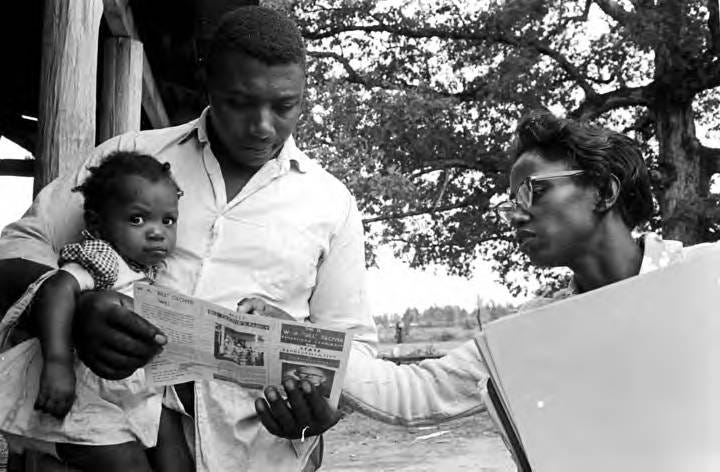
In 1961, SNCC split into two wings. One continued direct-action confrontations with police and local power structures. The other began a voter registration project, first in McComb, Mississippi, led by Bob Moses and his mentor, Amzie Moore. Those who argued for the voting project understood something crucial; organizing meant listening. Local Black leadership in the Deep South wanted support registering to vote, and SNCC met people where they were, not where outsiders thought they should be.
What’s often missed is that this split did not follow the neat ideological lines people imagine. Many of the SNCC members most associated with nonviolence as a moral philosophy, like Diane Nash, stayed in direct action. Meanwhile, the more militant organizers, those who viewed nonviolence as a tactic rather than a way of life, moved into the voter registration work. They understood the risk and the organizing potential embedded in that choice.
Malcolm X understood this too.
Malcolm supported SNCC as an organization. He saw them as militant and aligned with his own politics. In 1961, he debated Bayard Rustin at an event organized by Howard University students, including SNCC’s Courtland Cox and Stokely Carmichael. In 1964, he met with SNCC organizers who had come up from Mississippi, among them John Lewis and Fannie Lou Hamer.
Malcolm X offered them respect and dialogue, which he saw as essential to building relationships. “I myself would go for nonviolence if it was consistent,” Malcolm told them. “If the KKK is going to be nonviolent, then I’ll be nonviolent… I’m not criticizing those here who are nonviolent… I congratulate anyone who can be nonviolent in the face of all that action.”
In 1965, Malcolm traveled to Selma and spoke directly to young organizers, affirming their work and sharpening their analysis. His influence would be felt in SNCC’s organizing in places like Lowndes County, Alabama and Cambridge, Maryland. SNCC and Malcolm were not operating in opposition to one another. They were in dialogue and shaping each other’s political development in real time.
SNCC was influenced by Malcolm’s clarity. The organization used nonviolence strategically, but it also understood the reality of armed self-defense in the rural South.1 SNCC members lived among guns. They organized alongside people who would and did shoot back when white supremacists terrorized their communities.
By 1966, this politicization was very clear. Stokely Carmichael’s election over John Lewis as SNCC chair was not a sudden turn but the culmination of years of internal struggle, debate, and growth, much of it shaped by the teachings of Malcolm X and also by SNCC’s internal structure that fostered dialogue. SNCC members were encouraged to present position papers that members would then debate and discuss.
SNCC was never reformist. It was constantly learning and adapting, arguing internally because its members were serious about changing material conditions—dialectical in practice and grounded in material struggle.
John Lewis, Fannie Lou Hamer and Strategy in the Deep South
While John Lewis was voted out of his position in SNCC that fact might be used to flatten his early politics. I don’t mean to dismiss his contributions and radicalism of his youth. Lewis had an early analysis of policing as a racist institution.2 The speech he originally prepared for the 1963 March on Washington, later softened before delivery, was initially militant and serious. “We cannot support wholeheartedly the administration’s civil rights bill, for it is too little and too late. There’s not one thing in the bill that will protect our people from police brutality.”
Lewis put words to what the state was doing, and he also paid for it. He endured sustained beatings by white supremacists, just as Fannie Lou Hamer did. Mrs. Hamer was born into a sharecropping family in Mississippi and was forced to leave school after the sixth grade. She was arrested, brutally beaten and left permanently disabled because she insisted on registering to vote. SNCC did not treat her as a symbol. Bob Moses organized with her and recognized her as a strategist.
Dottie was close to Mrs. Hamer. The first thing you see when you enter Dottie’s apartment is a photograph of Mrs. Hamer, hung beside a handwritten letter Mrs. Hamer once sent Dottie. When I asked Dottie about it recently, she told me:
“One of the many purposes of SNCC was to find Mrs. Hamer. Finding Mrs. Hamer meant that you had to be in a situation where you really got involved with local people. Then you had to convince Mrs. Hamer that she was Mrs. Hamer. She often didn’t know herself that she was capable of what she was ultimately capable of. Anyone who finds the Mrs. Hamers of the world, will definitely be a force to reckon with.”
SNCC’s radicalism was measured by who it found and who it followed. It wasn’t a theory club. It was an organization rooted in the lives of the poorest Black people in the country.
Bob Moses once explained that his most effective organizing tool was a ball.3 He said you walk through communities bouncing it until it rolls under someone’s porch, opening the door to conversation. The person who lived there might be more conservative or more religious than he was. That didn’t stop him.
Moses listened. He learned what people valued, what they wanted and how white power structured their lives. Organizing didn’t begin with ideological alignment, but rather with a relationship or a simple conversation.
Carmichael, Rap Brown and the Evolution of SNCC
By the time Stokely Carmichael became chair in 1966, SNCC’s organizing had moved decisively toward independent Black Power. In Lowndes County, Alabama, SNCC helped local organizers form the Lowndes County Freedom Organization, an independent political party represented by the black panther. That symbol would later inspire two young organizers in Oakland, California—-Huey Newton and Bobby Seale.
This shift wasn’t a turn toward radicalism, but it was just its maturation. Having helped force the expansion of voting rights, SNCC now prioritized independent political organizing outside the Democratic Party. Around this time, Ruby Doris Smith Robinson replaced Forman as executive secretary. In her short life, Ruby Doris helped popularize SNCC’s “jail no bail” policy. She served 45 days at Parchman Prison, a typical sentence length within SNCC, and on another occasion spent 30 more days incarcerated, including time on a chain gang. She died of cancer in 1967, at just 25 years old.
When Carmichael stepped down in 1967, H. Rap Brown took over as chair, on Carmichael’s recommendation. The year before, white SNCC members had been asked to leave the organization and organize other white people instead. Rap Brown replaced the “Nonviolent” in the name with “National,” creating the Student National Coordinating Committee. Around this time, SNCC formed a brief, formal alliance with the Black Panther Party, based on their shared belief in Black Power. Carmichael and Jim Forman even held short positions in the Panthers in 1968.
SNCC’s work was relational and evolving. It was never rigid, and it was never perfect. The organization faced internal turmoil and dysfunction, and it operated under constant threat. Sometimes there were opposing factions that spent hours arguing. Rap Brown eventually left because he was targeted by the state. COINTELPRO surveilled SNCC relentlessly, and both Brown and Carmichael were singled out because J. Edgar Hoover feared the rise of a “Black Messiah.” Many historians argue that COINTELPRO actively sabotaged the short lived SNCC–BPP merger through rumors and anonymous letters.
Still, SNCC organizers kept building. White supremacist terror did not end overnight, but life in the Deep South became much safer from white terrorism and communities were strengthened. Families like mine, who had left Mississippi for Chicago, sometimes returned. They were drawn back by the sense that organizing had made a difference in people’s lives.
Militancy in Overalls
The Left tends to fixate on the aesthetics of militancy. SNCC members didn’t wear overtly militant clothing; they wore overalls, like the sharecroppers with whom they hoped to build. In doing so, they created power where none had previously existed.
SNCC’s story is often reduced to just a few names like Julian Bond and John Lewis, a handful of slogans, like “we shall overcome,” or a sanitized timeline of marches and LBJ legislations. But as I see it, through my friendships, mentorship and study, the reality is richer. SNCC was militant in discipline and in their love for Black people. They trusted poor and working-class people and believed in the long struggle, or as Ella Baker called it, the “spade work.” Leftist impatience explains the failure to sit down and grapple with SNCC’s legacy. Their politics were about listening and rolling a ball under a porch to start a conversation.
Pies and Friendship
The day after Trump’s election in November 2024, I drove four hours to visit my friend Chuck Neblett in his Kentucky town. We ate fried catfish, and he laughed about the time Stokely Carmichael stole his suit for a speaking engagement, and the time he eventually stole it back from Carmichael’s mother’s house in New York City. “He was my dear friend.” Not colleague or comrade. Friend.
By the time I leave Dottie’s apartment the other day, and we’ve eaten the sweet potato pie, we’ve laughed, reflected and talked about Mrs. Hamer’s brilliance, as we often do. People like Dottie, Diane, Chuck, Judy, and Charlie Cobb were and are real. They were living, breathing organizers, and their work continues to shape how I try to build today.
I don’t think I’ll ever tire of learning SNCC or writing about SNCC. As a Zinn Education Project Prentiss Charney Fellow, I’m finishing a two year project, writing a middle school curriculum on SNCC, in the hopes at least one kid will be inspired to learn more about SNCC and follow their example. I try to do what SNCC organizer Charles Sherrod urged: find one person beyond myself and begin there.
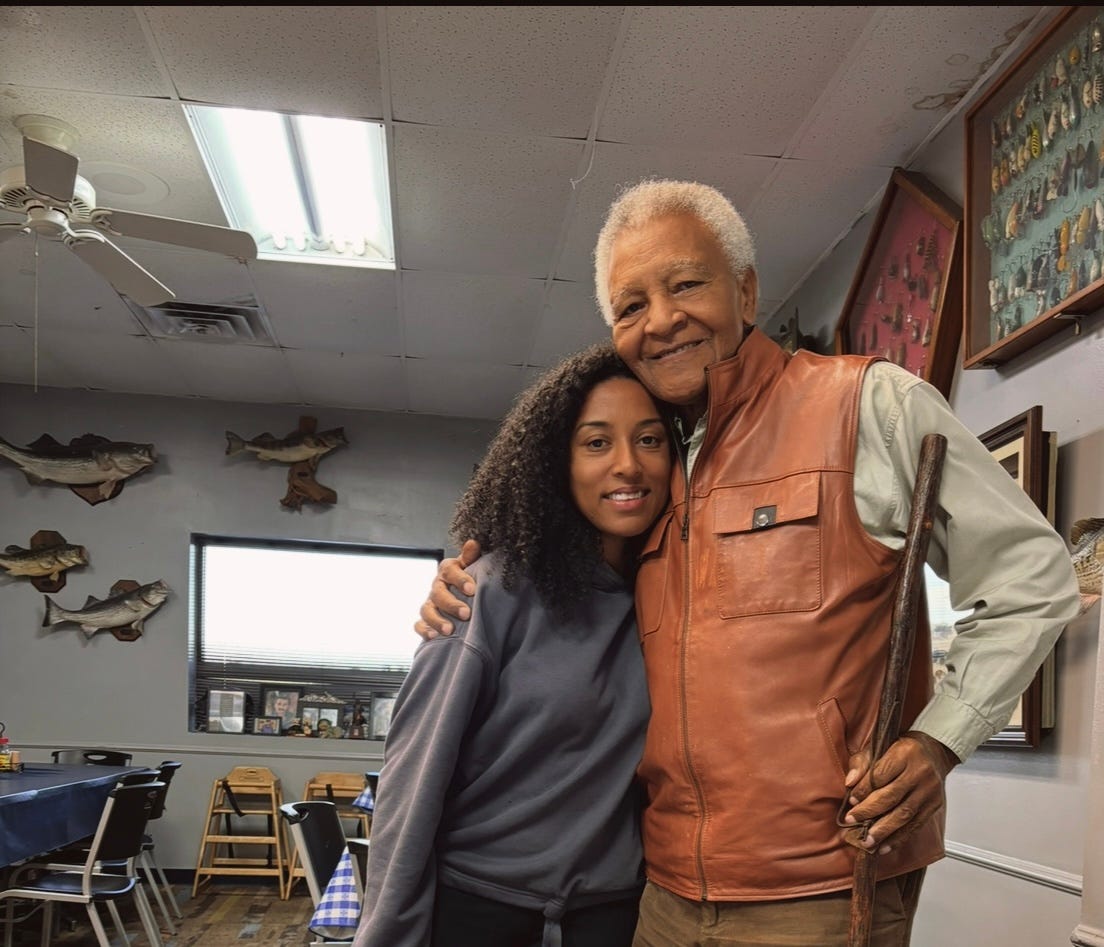
Read Charlie Cobb’s book! This Nonviolent Stuff’ll Get You Killed: How Guns Made the Civil Rights Movement Possible. Amzie Moore is who said, “This nonviolent stuff’ll get you killed.”
I recommend reading Police Against the Movement: The Sabotage of the Civil Rights Struggle and the Activists Who Fought Back for more of this history.
Charles Payne’s I’ve Got the Light of Freedom: The Organizing Tradition and Mississippi Freedom Struggle
Tess...you're a bright light in a world that seems to be getting darker and more dangerous. ✨
I really enjoyed reading this and I got to add a bunch of books to my reading list. Telling the story in part though your personal connections really helped highlight the central importance of human to human connection in building solidarity, resilience, and resistance. I liked the tidbit about organizers wearing overalls and meeting share croppers where they were. Anyways wanted to say thank you for helping educate and inspire!